Nurse Spotlight:
Technology in Nursing – Innovations Transforming Care Delivery, Workforce Efficiency, and Patient Outcomes
The Digital Evolution of Nursing
- Nursing workforce shortages and experience gaps resulting from seasoned nurses leaving the field after the pandemic and being replaced by nurses new to the profession.
- Challenges related to healthcare access in rural and underserved areas.
- Rising healthcare costs including prescription drugs.
- Increasing patient acuity.
- Ongoing financial pressures tied to achieving quality outcomes for reimbursement.

Technology in Current Nursing Practice
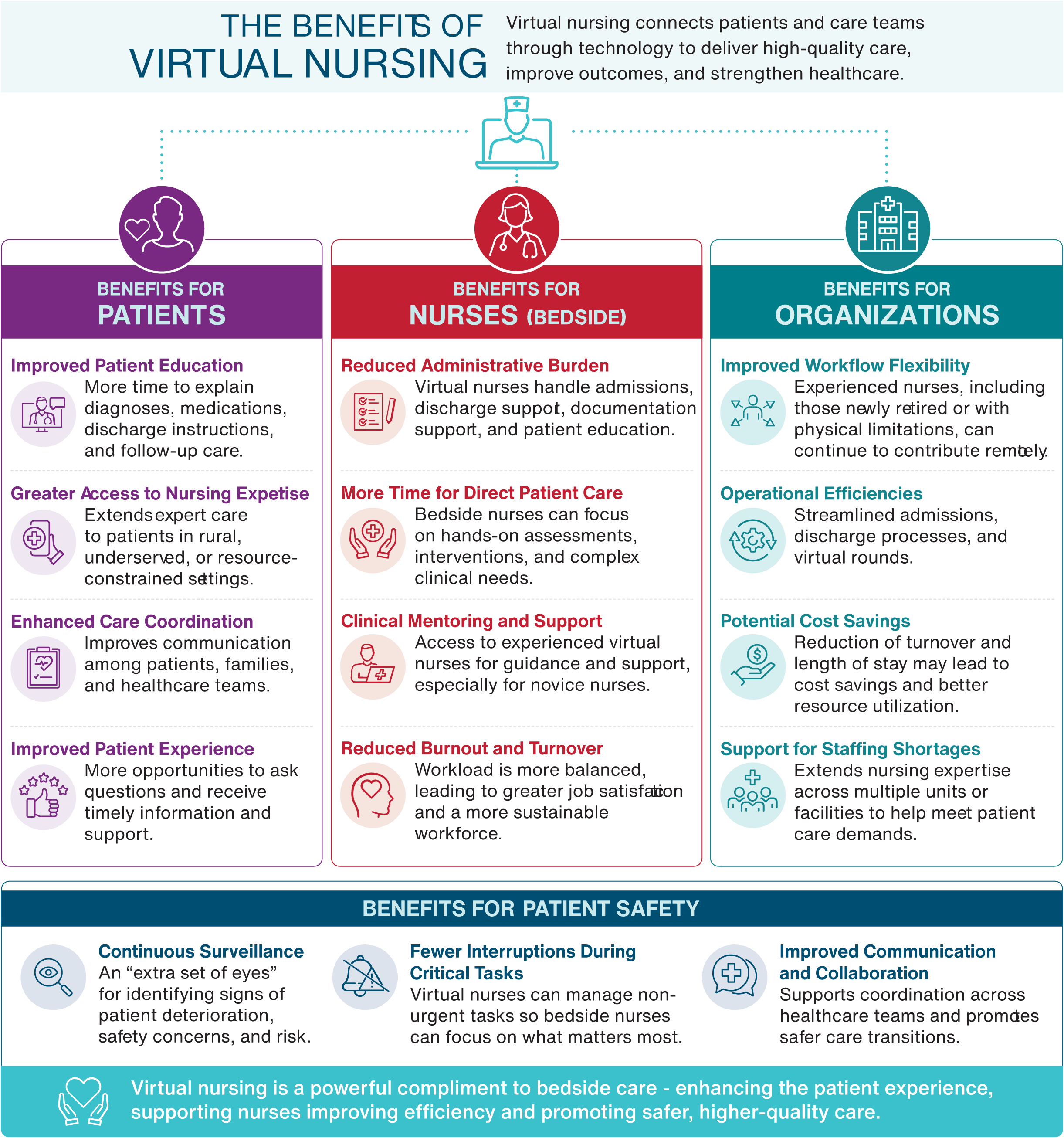
Virtual Nursing

Risk Management and Patient Safety Considerations:
Technology use may introduce challenges impacting patient safety and contribute to professional liability exposure when systems, devices, or users do not function as intended. Technology-related risks include, but are not limited to, the following: (See infographic.)
- Failures or delays in managing product and device recalls or safety alerts, including lack of formal processes to prevent recalled devices from being re-introduced into clinical use/ circulation before recall issues are addressed.
- Cybersecurity risks and outdated software, which may compromise the confidentiality, integrity, and availability of patient information and disrupt clinical care.
- Misalignment of technology use for specific aspects of patient care or patient populations, as certain physical, neurological, and behavioral health assessments may require direct physical contact and cannot be fully completed through virtual observation alone. Failure to recognize the limitations of remote assessment may contribute to incomplete patient assessments and missed or delayed treatments.
- Communication breakdowns and incomplete hand-offs related to lack of care coordination in virtual care models.
- Interoperability gaps resulting in incomplete, inaccurate, or duplicative data, which may contribute to clinical decisionmaking errors.
- Overreliance on AI-enabled technologies and automated processes, potentially resulting in diminished critical thinking, nursing deskilling, or failure to identify inaccurate recommendations when outputs are accepted without independent validation.
- Lack of sufficient “downtime” procedures and back-up resources to enable appropriate patient care to continue without interruption in the event the technology stops functioning.
- Data overload and alert fatigue, which may desensitize nurses to important warnings.
- Training and competency gaps, which may lead to improper technology use, incomplete assessments, documentation inaccuracies and failure to recognize technology limitations.
Breakdowns in technology-related nursing care may contribute to delayed treatment, medication errors, communication failures, privacy breaches, documentation inaccuracies, and missed changes in patient condition. For example, virtual nursing may present challenges when assessing a patient’s mental health status. During a video encounter, a nurse may be unable to fully observe subtle nonverbal cues, environmental factors, or self-harming behaviors that could indicate worsening depression or escalating suicide risk, potentially resulting in an incomplete assessment and delayed intervention. Similarly, virtual patient education may be less effective when technology barriers interfere with communication. A patient receiving virtual diabetes education who experiences poor audiovisual connectivity may misunderstand insulin administration instructions, increasing the risk of medication errors and adverse patient outcomes. In professional liability claims, questions may arise regarding whether nurses appropriately used available technologies, responded to system-generated alerts, validated automated recommendations, maintained competency with new tools, or followed organizational policies and procedures and documented plan of care and outcomes. These examples highlight the importance of recognizing the limitations of technology, validating patient understanding, and ensuring appropriate escalation to in-person assessment when clinically indicated. The following recommendations offer guidance to support nurses and nurse administrators in utilizing existing technology and integration of emerging technologies into clinical practice.
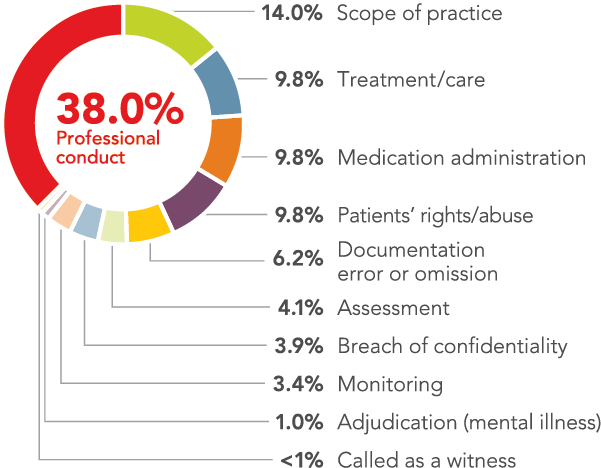
If you are contacted during the investigative stage, consult with an attorney before you respond to the SBON, ensuring to reply within the deadline set by the Board.
Nurse Spotlights
For risk control strategies related to:
- Protecting Your License
- Documentation
- Artificial Intelligence
- Technology in Nursing
- Liability for Charge Nurses
- Well-being and Mental Health

License Protection vs. Professional Liability.
What’s the difference?
License Protection
Professional Liability
The process can take months or even years to fully resolve, lengthening the process and increasing the associated costs.
Allegations
State Board of Nursing Actions
In some cases, the SBON may impose multiple disciplinary actions, such as a reprimand coupled with a fine. Depending upon the state in which you practice, most outcomes involving discipline against a nurse’s license are a matter of public record and reported to NURSYS® and the National Practitioner Data Bank (NPDB). The SBON also may report disciplinary actions to other agencies, regulatory authorities, or other SBONs, which may decide to initiate their own investigation and take action.
Depending upon the state in which you practice, most outcomes involving discipline against a nurse’s license are a matter of public record and reported to NURSYS® and the National Practitioner Data Bank (NPDB).
20
25
Risk Management Recommendations
Everyday Practice
- Practice within the requirements of your state’s nurse practice act, in compliance with organizational policies and procedures, and within the national standard of care. If regulatory requirements and organizational scope of practice differ, comply with the most stringent of the applicable regulations or policy. If in doubt, contact your SBON or specialty professional nursing association for clarification.
- Document your patient care assessments, observations, communications and actions in an objective, timely, accurate, complete, and appropriate manner. Never alter the healthcare information record after the fact unless it is necessary for the patient’s care. If it is essential to add information to the record, properly label the delayed entry, but never add any documentation to a record for any reason after a complaint has been made. If additional information related to the patient’s care emerges after you become aware that SBON action is pending, discuss the need for additional documentation with your manager, the organization’s risk manager and your legal counsel.
- Maintain files that can be helpful to your character. Retain copies of letters of recommendation, performance evaluations, thank-you letters from patients, awards, records of volunteer work and continuing education certificates.
- Immediately contact your professional liability insurer if you:
- Become aware of a filed or potential professional liability matter against you.
- Receive a subpoena to testify in a deposition or trial.
- Have any reason to believe that there may be a potential threat to your license to practice nursing.
- Refrain from discussing the matter with anyone other than your defense attorney or the professionals managing your matter.
- Promptly return telephone calls from your defense attorney and professionals managing your matter.
- Contact your attorney or designated professional before responding to telephone calls, e-mail messages or requests for documents from any other party.
- Provide your insurer with as much information as you can when reporting such matters, including contact information.
- Never testify in a deposition without first consulting your insurer or legal counsel.
- Copy and retain all legal documents for your records, including:
- The summons and complaint
- The subpoena
- Attorney letter(s)
- Any other legal documents pertaining to the matter

License Protection Coverage
Professional liability insurance that includes coverage for license protection helps to insure nurses against licensing board complaints by:
- Reimbursing you up to the applicable limit for your defense of disciplinary charges arising out of a covered incident.
- Covering costs associated with a disciplinary inquiry, up to $25,000 annual aggregate.
- Covering expenses such as legal representation, lost wages and travel.
Ready to enhance your risk management education?
Stay up to date on industry insights, trends, and tips when you sign up to receive our exclusive monthly newsletter. You’ll receive case studies, industry insights, articles, videos, webinars, and more!